
 By
Sam
By
Sam
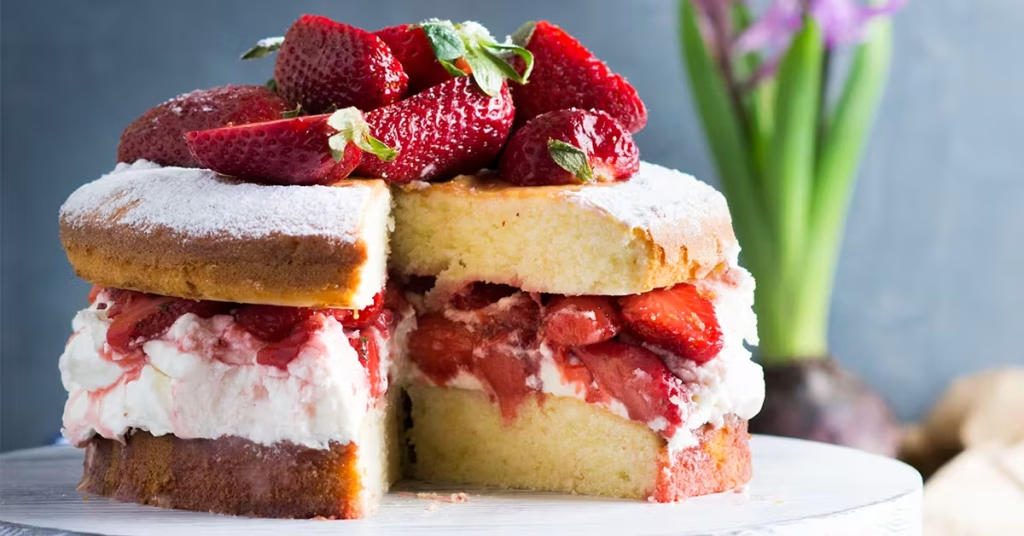
The Victoria sponge cake with jam is one of those timeless classics that never seems to lose its charm. Simple in its construction yet elegant in its presentation, it carries a sense of tradition while still feeling fresh and inviting every time it’s made. For me, this cake represents the heart of home baking: straightforward ingredients, a reliable method, and a result that pleases everyone who tries it.
Why the Victoria Sponge Stands Out
There are countless cakes in the world, but very few can match the balance of simplicity and sophistication that a Victoria sponge offers. It doesn’t rely on elaborate decorations or complex flavor combinations. Instead, its appeal comes from its soft, buttery sponge paired with a generous layer of jam, sometimes accompanied by lightly whipped cream. The cake is light yet satisfying, sweet without being cloying, and versatile enough to be enjoyed at any time of day.
The Victoria sponge has an enduring history as well. It was named after Queen Victoria, who was said to have enjoyed a slice with her afternoon tea. That royal connection certainly helped cement its place in British baking traditions, but the cake’s staying power lies in the fact that it is consistently delicious. It has a clean flavor profile that never feels outdated, making it a true staple of teatime tables across generations.
The Essentials of a Classic Sponge
At its core, a Victoria sponge cake is about balance. The sponge should be light and airy yet strong enough to hold the filling without collapsing. Achieving this texture depends on proper technique and good-quality ingredients. Butter, sugar, eggs, and self-rising flour are the foundation, with a touch of vanilla sometimes added for extra depth.
Creaming the butter and sugar until pale and fluffy is the first and most crucial step. This isn’t just about mixing; it’s about incorporating air into the batter, which gives the sponge its rise. Eggs are then added one at a time, ensuring each is fully incorporated before the next goes in. This prevents the batter from curdling and helps maintain a smooth, stable texture. Finally, the flour is folded in gently, preserving the air pockets created earlier and preventing the sponge from becoming dense.
Selecting the Right Jam
The jam in a Victoria sponge is just as important as the sponge itself. A poor choice of filling can make an otherwise well-made cake fall flat. Strawberry jam is the traditional favorite, its bright sweetness complementing the buttery sponge perfectly. Raspberry jam is another excellent choice, offering a slightly sharper edge that balances the richness.
I always reach for a high-quality jam, preferably one with a good fruit content rather than one that’s overly sweet and jelly-like. The fruit pieces in a good jam add both texture and flavor, preventing the filling from feeling one-dimensional. Spreading the jam evenly but not too thickly ensures every bite has just the right balance of cake and fruit.
The Debate Over Cream
One of the longest-running discussions around Victoria sponge cake is whether or not to include cream. Purists argue that a traditional Victoria sponge should only have jam, while others insist that a layer of whipped cream or buttercream elevates the cake to another level.
Personally, I enjoy both versions depending on the occasion. With just jam, the cake feels lighter and more delicate, perfect for an afternoon snack. When cream is added, it transforms into a more indulgent dessert, with the richness of the filling making it suitable for special gatherings. The key with cream is to keep it light. Over-whipped or overly sweet cream can overpower the balance of the cake, so I prefer softly whipped double cream with just a hint of sugar.
Baking the Sponge to Perfection
Even the simplest cakes can present challenges, and the Victoria sponge is no exception. Timing and temperature matter enormously here. I always preheat the oven properly before placing the tins inside to ensure the cakes rise evenly. The batter should be divided equally between two tins, and smoothing the tops before baking helps them rise consistently without forming peaks.
Baking at around 170°C (340°F) gives the sponge enough time to cook through without drying out. The cakes are ready when they are golden on top and spring back lightly to the touch. A skewer inserted in the center should come out clean, though I usually rely more on the springiness test than the skewer alone. Once baked, it’s important to let the cakes cool in their tins for a few minutes before transferring them to a wire rack. This prevents them from breaking apart while still warm.
Assembly and Presentation
Assembling a Victoria sponge cake is always a moment of quiet satisfaction. The cooled sponges are sandwiched together with a layer of jam, and if desired, cream as well. I like to place the cake upside down for the top layer, so the flat bottom creates a smooth finish. Traditionally, the top is dusted with a fine layer of caster sugar, though some people prefer icing sugar.
What I love about this cake is that it doesn’t need elaborate decoration. The simplicity of its appearance is part of its charm. That dusting of sugar on top, combined with the thin line of jam visible at the edges, is enough to make it look inviting. It’s proof that a cake doesn’t need to be complicated to be beautiful.
Variations Worth Exploring
While the classic Victoria sponge is unbeatable in its own right, there are ways to experiment without losing the essence of the cake. For a slightly different flavor, I’ve sometimes added a splash of lemon zest to the batter, which brightens the sponge and pairs beautifully with raspberry jam. On other occasions, I’ve swapped the jam entirely for a thin layer of lemon curd, which creates a tangier finish.
Another variation I enjoy is using buttercream instead of whipped cream. Coffee-flavored buttercream can add a surprising twist, bringing a richer, more adult flavor profile. However, these are departures from tradition, and I always find myself returning to the classic jam-only version when I want the purest expression of the cake.
Serving the Cake
Victoria sponge cake is one of the most versatile cakes to serve. It fits perfectly with a pot of tea, which is perhaps the most traditional pairing, but it also works with coffee or even a glass of cold milk. Because it isn’t overly rich, it can be served at any time of day, from morning coffee breaks to evening desserts.
I like to cut the cake into neat wedges and serve them on simple plates, allowing the cake itself to take center stage. For a larger gathering, smaller slices work well, as the cake is easy to portion without losing its shape. It has a way of disappearing quickly, no matter how it’s served, which to me is always a sign of success.
Storage and Freshness
A Victoria sponge cake is best enjoyed fresh, ideally on the day it’s made, but it will keep for a couple of days if stored properly. I usually keep it in an airtight container at room temperature, away from direct sunlight. If cream is included in the filling, then refrigeration becomes necessary, though this can firm up the sponge slightly. To counter that, I like to let it sit at room temperature for half an hour before serving.
Freezing the sponge layers without the filling is another option. Once completely cooled, the sponges can be wrapped tightly and stored in the freezer for up to a month. When thawed and filled with jam, they taste just as good as freshly baked, which makes this cake a reliable choice for preparing ahead of time.
The Lasting Appeal of a Classic
What makes a traditional Victoria sponge cake with jam so enduring is its honesty. It doesn’t try to impress with extravagant decorations or unusual flavors. Instead, it relies on the basics, done well. Butter, sugar, eggs, flour, and jam are transformed into something far greater than the sum of their parts, and that transformation is the essence of good baking.
It’s a cake that brings people together, whether over a casual cup of tea or as the centerpiece of a family gathering. It’s dependable and familiar, yet never dull. Every time I make one, I’m reminded that some recipes become classics for a reason: they deliver joy consistently, without fail.
Conclusion
The traditional Victoria sponge cake with jam is a perfect example of how simplicity can be the key to greatness. Its light sponge, balanced filling, and elegant appearance make it one of the most beloved cakes in the world of baking. Whether served plain with just jam or with the addition of cream for extra indulgence, it has a timeless quality that ensures it will never go out of style.
For me, this cake represents the very best of baking: not complexity, but balance; not extravagance, but consistency. And perhaps that’s why it continues to hold its place at tea tables and family gatherings everywhere. A Victoria sponge isn’t just a cake, it’s a tradition, and one I’ll always be glad to share.