
 By
Sam
By
Sam
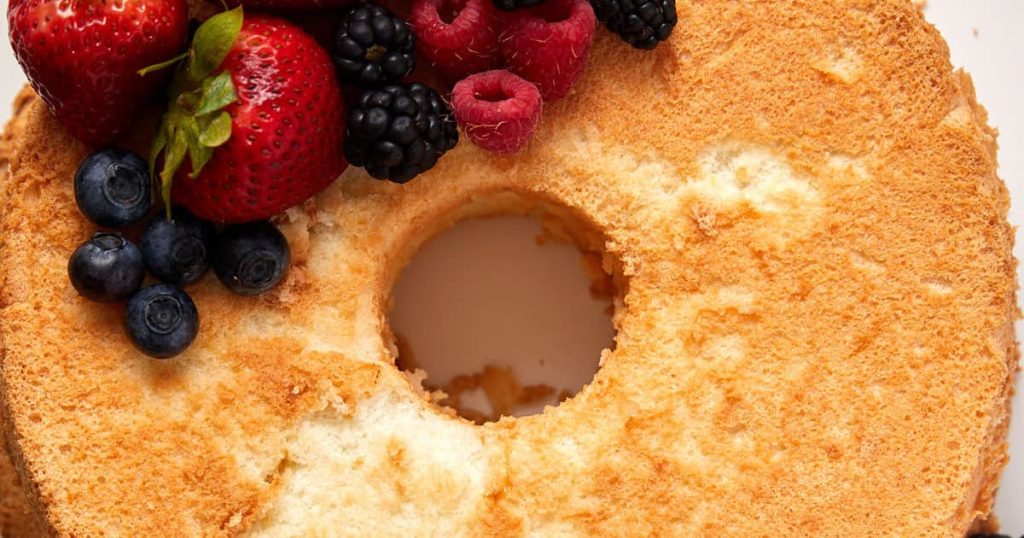
Angel food cake has always struck me as a dessert that feels almost weightless, like a sweet cloud resting on a plate. The first bite is so airy and soft that it practically melts on the tongue before you realize what just happened. It is one of those cakes that proves you don’t need butter, oil, or heavy creams to make something deeply satisfying. What makes it stand apart from almost every other cake I’ve baked is the way it relies on air, technique, and a few humble ingredients to create a result that seems more magical than mechanical.
What Makes Angel Food Cake Special
This cake is unlike any other. While most cakes depend on fat for flavor and moisture, angel food cake skips it entirely and relies instead on whipped egg whites. Those whipped whites are the backbone of the recipe, trapping tiny bubbles of air that expand in the oven and give the cake its unique lift. The absence of butter and egg yolks means every slice is lighter on the stomach, which makes it a wonderful option when I want something sweet that doesn’t weigh me down.
There’s also a nostalgic quality to angel food cake. Many people associate it with celebrations, summer gatherings, or family recipes passed down through generations. For me, it always feels like a reminder that baking doesn’t need to be complicated to feel special. The charm lies in its elegance and the delicate balance of technique and simplicity.
The Ingredients That Matter Most
Because angel food cake has so few components, each ingredient plays a critical role. Egg whites are the star, and they need to be fresh and completely free of yolk. Sugar, preferably superfine, sweetens the cake but also stabilizes the whipped whites. Cake flour contributes a soft and tender crumb, and cream of tartar provides acidity that strengthens the structure of the meringue. A touch of vanilla or almond extract brings just enough flavor to elevate the cake without overwhelming its subtle sweetness.
Unlike many other cakes, there’s no butter or oil to disguise mistakes. If the whites aren’t whipped correctly or the flour isn’t sifted enough, it shows up in the final product. That’s why angel food cake feels like an exercise in precision. It demands patience, but the payoff is worth every step.
Perfecting the Egg Whites
The most important step in this recipe is whipping the egg whites. I always make sure the bowl and beaters are spotless because any grease can prevent the whites from whipping properly. I begin at a low speed to build small bubbles, then gradually increase the speed while sprinkling in cream of tartar and sugar. The gradual addition of sugar ensures the whites stay glossy rather than grainy.
The goal is stiff peaks that are still shiny and flexible. If they’re too soft, the cake won’t rise properly. If they’re overbeaten, the whites lose their elasticity and collapse during baking. Getting it right takes practice, but once you do, it becomes second nature.
Folding Without Losing Air
Once the whites are ready, the flour and sugar mixture gets folded in gently. This step can feel tedious, but it’s the part that determines whether the cake will stay light or turn heavy. I sift the flour multiple times before folding it in to guarantee even distribution. Then I use a spatula with deliberate motions, cutting through the center, scooping along the sides, and folding over the top. Each stroke has to preserve as much air as possible.
It’s a meditative process. I slow down, reminding myself that this is not the time to rush. Folding is less about mixing and more about coaxing the ingredients into harmony without disturbing the delicate bubbles I worked so hard to create.
Choosing the Right Pan
The tube pan is essential for angel food cake. Its tall sides and hollow center allow the cake to bake evenly, while the ungreased surface gives the batter something to cling to as it rises. Greasing the pan would be a disaster because the batter would slide down instead of climbing up, leaving you with a flat and deflated cake.
Most tube pans come with a removable bottom, which makes releasing the cake much easier once it’s cooled. I also appreciate the pans with little metal feet because they simplify the cooling process, which brings me to another unique part of baking this cake.
Cooling Upside Down
After the cake comes out of the oven, it has to cool upside down. This step might look strange, but it prevents the cake from collapsing on itself while it sets. The weightless structure needs gravity to hold it in place, and cooling upside down is the secret to maintaining that fluffy height.
The first time I inverted a pan over a bottle, I hovered nervously, but once I saw how well it worked, it became second nature. It’s one of those quirks of angel food cake that makes the process so memorable.
Flavor Enhancements and Pairings
On its own, angel food cake has a sweet but understated flavor, which is part of what makes it so versatile. I often pair it with fresh fruit, especially strawberries or blueberries, because their natural tartness balances the cake’s light sweetness. Whipped cream is another classic topping, adding richness without overpowering the airy crumb.
For something more indulgent, I’ve drizzled slices with chocolate sauce or citrus glaze. Lemon in particular works beautifully because its brightness contrasts with the delicate flavor of the cake. Sometimes I even cube the cake and layer it in a trifle with cream and berries, turning it into a centerpiece dessert for gatherings.
A Dessert for Any Occasion
What I love most about angel food cake is how adaptable it is. It feels equally at home at a casual family picnic or an elegant dinner party. Because it isn’t too rich, it appeals to guests who might otherwise shy away from heavy desserts. It also pairs well with coffee, tea, or even sparkling wine, which makes it a flexible choice for entertaining.
It’s also a wonderful cake for celebrating milestones. Birthdays, anniversaries, or even just a weekend with loved ones all feel a little more special when this cake is on the table. Its lightness carries a sense of celebration that makes any occasion feel brighter.
Common Challenges and Fixes
Like all recipes that rely on technique, angel food cake comes with challenges. If the cake shrinks or collapses, it’s usually a sign that the egg whites weren’t whipped enough or the flour was folded in too roughly. A dense texture often means the whites were overbeaten or not enough air was incorporated into the batter.
Humidity can also play a role. On damp days, sugar tends to absorb moisture from the air, which can interfere with the meringue. I’ve learned to be extra cautious about weather conditions when planning to bake this cake. Once you recognize the potential pitfalls, though, it becomes easier to avoid them.
Why I Keep Returning to Angel Food Cake
I’ve baked countless cakes, from rich chocolate tortes to buttery pound cakes, yet angel food cake continues to hold a unique place in my baking routine. It’s a cake that reminds me to slow down and focus on the craft of baking. Every step, from separating the eggs to cooling the pan upside down, feels intentional.
More than that, it’s a cake that delights people. Guests are always impressed by its height, its featherlight texture, and the way it dissolves on the tongue. It’s one of those desserts that sparks conversation and leaves people reaching for a second slice without guilt.
Conclusion
Airy and delicate angel food cake is proof that simplicity can be extraordinary. With nothing more than egg whites, sugar, flour, and a touch of patience, it transforms into a dessert that feels almost ethereal. Every step, from whipping the whites to folding in the flour and cooling the cake upside down, plays a role in creating something that’s as beautiful as it is delicious.
For me, this cake is more than a recipe. It’s an experience that combines precision with creativity, patience with reward, and tradition with timeless appeal. Each time I make it, I’m reminded that baking is not just about feeding people but also about creating moments that linger long after the last crumb is gone. Angel food cake has that kind of magic, and it will always be a dessert I return to with joy.