
 By
Sam
By
Sam
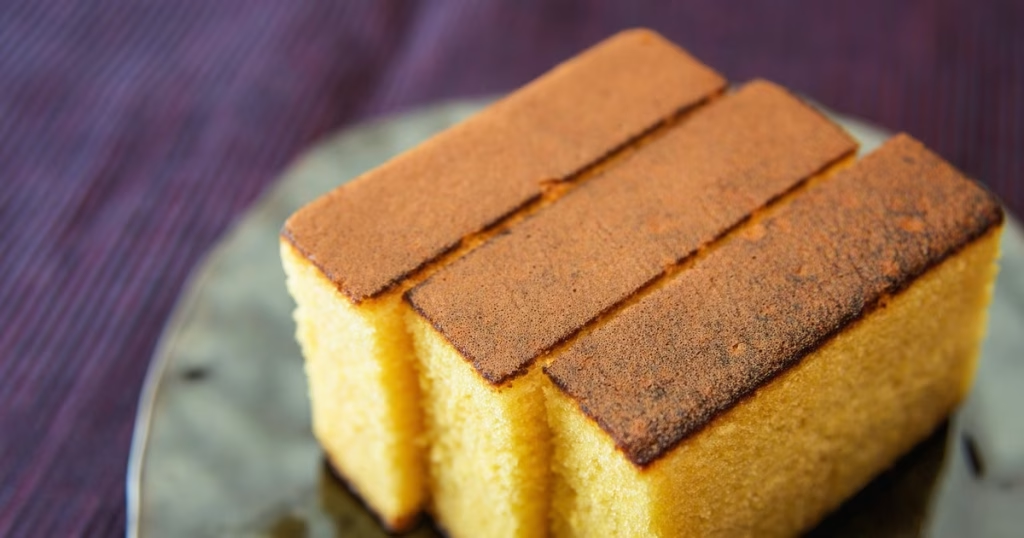
Japanese Castella honey sponge cake has always fascinated me because of how such a simple list of ingredients can create a dessert with such sophistication. Unlike many other cakes that rely on butter, oil, or heavy cream for richness, Castella stands out for its feather-light texture, moist crumb, and the delicate flavor of honey that lingers after every bite. It is a cake that proves restraint in ingredients can still lead to indulgence on the palate.
The Origin of Castella
The history of Castella cake traces back centuries, with its roots tied to the cultural exchange between Japan and Portugal in the 16th century. Portuguese merchants introduced a sponge-like cake known as “Pão de Castela” to Nagasaki. The Japanese adapted it, refining the technique and incorporating their own ingredients, eventually giving birth to the Castella we know today. This dessert became especially popular in Nagasaki, where it is still considered a specialty and often sold in beautiful long boxes, making it a popular gift.
The addition of honey was a particularly Japanese twist, and it set their version apart. Honey added a gentle sweetness and a moist texture that makes Castella distinct from the European sponge cakes that inspired it. Over the years, the cake evolved into a national treasure, enjoyed not only in Nagasaki but across Japan, where it symbolizes elegance and refinement.
Why Castella Stands Out
Castella is a study in balance. It doesn’t overwhelm with sugar, nor does it lean too heavily on fat for richness. Instead, it achieves its uniqueness through the beating of eggs, the delicate folding of flour, and the slow, low-temperature baking that gives it a moist, slightly chewy texture. The honey ties it all together with a floral sweetness, which is subtle yet present in every bite.
What really makes this cake different is its simplicity. With only a handful of ingredients, eggs, sugar, flour, starch syrup or honey, it proves that baking doesn’t always need complexity to be extraordinary. It’s a dessert that speaks to patience and precision more than extravagance.
The Texture That Defines It
If I were to describe the texture of Castella to someone who has never tried it, I’d say it sits somewhere between sponge cake and chiffon cake but with a denser chew that feels almost pudding-like. When you slice into it, the cake reveals a golden-brown top, a soft yellow interior, and a fine crumb that doesn’t crumble apart. The bottom usually develops a slightly caramelized layer, which contrasts beautifully with the airy inside.
That bottom crust is often seen as the “signature” of a well-made Castella. It should be dark but not burnt, evenly baked, and slightly sticky with honey. Many people consider it the best part, nibbling on that sweet layer first before savoring the rest of the cake.
The Role of Honey
Honey in Castella is not just an afterthought; it’s the soul of the cake. It provides a depth of sweetness that plain sugar can’t achieve. Depending on the honey you choose, you can add different flavor notes to your Castella. A light clover honey will lend a delicate sweetness, while something bolder like buckwheat honey adds a more earthy, almost caramel-like undertone.
Honey also helps retain moisture, which is why Castella stays fresh longer than most sponge cakes. Traditionally, the cake tastes even better a day or two after baking, once the flavors have had time to settle and deepen.
Baking Castella at Home
Making Castella at home can feel intimidating at first because it requires careful technique. The eggs must be whipped to the right consistency, the flour must be folded in without deflating the batter, and the baking must be done low and slow to avoid dryness. But once you understand the process, it becomes a soothing ritual.
The key is patience. Whipping the eggs long enough to trap air is crucial. This air is what gives Castella its structure, since it doesn’t rely on chemical leaveners like baking powder. Once you add the flour and honey, you need a light hand to preserve that airiness. Baking in a lined rectangular pan helps create the traditional shape, and covering the cake midway through ensures the top doesn’t brown too much.
The Beauty of Simplicity
One of the things I love most about Japanese Castella honey sponge cake is how versatile it is. It doesn’t need frosting or elaborate decorations to impress. Its charm lies in its minimalist presentation: a golden top, square slices, and the occasional wax-paper wrap if you’re serving it in the traditional Nagasaki style.
You can, of course, pair it with accompaniments. A dollop of whipped cream, some fresh berries, or even a drizzle of matcha syrup can elevate it into a plated dessert. But honestly, Castella doesn’t ask for much. It’s at its best with a simple cup of green tea or coffee, allowing its subtle sweetness to shine.
Serving and Storing Castella
The best way to enjoy Castella is to let it rest after baking. Fresh out of the oven, it will taste good, but if you wrap it tightly and leave it for a day, the honey flavor becomes more pronounced, and the texture moistens further. In fact, many bakers recommend making it a day ahead for this very reason.
To store it, keep it well-wrapped at room temperature for up to three days. If you refrigerate it, bring it back to room temperature before serving, as chilling can firm up the texture too much. Castella also freezes well, making it a good option if you like to prepare desserts in advance.
Regional Variations
Though Nagasaki remains the birthplace of Castella, different regions in Japan have developed their own variations. Some versions add matcha for a green tea twist, while others incorporate brown sugar for a deeper sweetness. There are even chocolate Castellas, which replace some of the flour with cocoa powder.
But the honey version is still the most classic and beloved. It’s the one you’ll most often see in gift boxes, carefully packaged to highlight its golden crumb and signature caramelized bottom.
My Experience With Castella
When I first attempted to bake Castella at home, I was surprised by how much precision it demanded. Unlike other cakes where you can play around with ingredients, Castella punishes shortcuts. If the eggs aren’t beaten enough, the cake collapses. If the flour isn’t sifted well, the crumb becomes heavy. If the baking temperature isn’t just right, you lose that moist, sticky texture that makes it so special.
But once I got it right, it was one of the most rewarding cakes I’ve ever made. The moment I sliced through the golden top and revealed that soft yellow interior, I felt like I had captured a piece of Japanese culinary tradition in my own kitchen. Sharing it with family, I noticed how quickly the slices disappeared, and I realized why this cake has endured for centuries.
Why It’s Worth Making
Japanese Castella honey sponge cake is more than just a dessert; it’s a cultural symbol. It shows how something as simple as flour, eggs, sugar, and honey can be elevated through technique and care into something extraordinary. It teaches patience in baking and rewards you with a cake that’s both humble and elegant.
If you’ve never tried making it, I encourage you to give it a go. It may take practice, but once you’ve mastered it, you’ll have a recipe that feels timeless and always impressive, no matter the occasion.
Conclusion
Japanese Castella honey sponge cake is a reminder that some of the most beautiful things in life are also the simplest. Its delicate texture, subtle honey sweetness, and cultural significance make it a cake worth treasuring. Whether you enjoy it plain, gift it to friends, or experiment with flavor variations, Castella is the kind of dessert that connects history with the present and turns a few humble ingredients into an unforgettable experience.