
 By
Sam
By
Sam
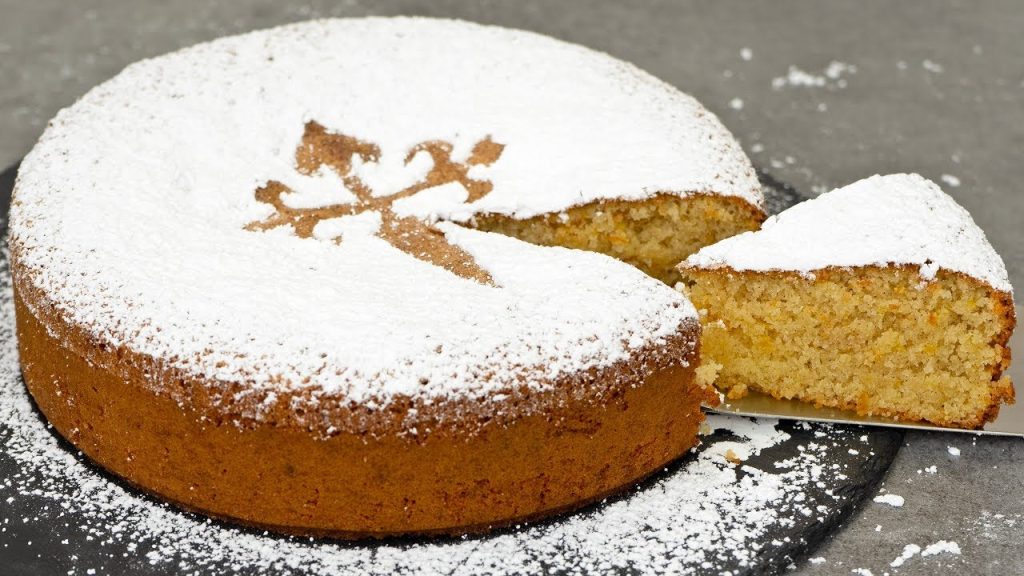
Spanish Almond Cake, more commonly known as Tarta de Santiago, is one of those desserts that immediately transports you to a rustic café in Galicia, with the aroma of almonds drifting from the oven and a dusting of powdered sugar making it look almost too beautiful to slice. I have always had a soft spot for simple yet flavorful cakes, and this one embodies that philosophy perfectly. It is a cake with very few ingredients, yet the result is rich, fragrant, and memorable. Unlike layered cakes or those requiring elaborate decorations, the beauty of Tarta de Santiago lies in its authenticity and the centuries of history behind it.
The History of Tarta de Santiago
The origins of Tarta de Santiago trace back hundreds of years, tied closely to the Camino de Santiago pilgrimage in northwestern Spain. Pilgrims who traveled the long journey to Santiago de Compostela would often encounter this cake as a treat along the way. Almonds were a valuable crop in Spain, especially in regions with Mediterranean climates, and bakers in Galicia developed this recipe as a way to highlight their abundance. Over time, the cake became a symbol of Galician hospitality and was named after Saint James, the patron saint of Spain.
In more recent centuries, the cake’s identity became tied to its decoration. The traditional way of presenting it involves laying a stencil of the Cross of Saint James on top of the baked cake, then dusting it generously with powdered sugar. When the stencil is removed, the cross stands out boldly against the snowy surface, creating a striking effect. Even if you don’t follow the religious symbolism, the visual presentation of Tarta de Santiago makes it unmistakable.
Simplicity in Ingredients
One of the things that immediately drew me to this cake is how few ingredients it requires. At its core, Tarta de Santiago only asks for ground almonds, eggs, sugar, and lemon zest. Some variations incorporate a touch of cinnamon or a splash of brandy, but the essentials remain constant. No flour is used, making it naturally gluten-free, which is a delightful surprise for anyone who has dietary restrictions.
The almonds provide the body of the cake, giving it that dense but moist texture that distinguishes it from lighter sponge cakes. The eggs contribute richness and structure, while the sugar balances the earthiness of the nuts. Lemon zest adds a brightness that cuts through the sweetness, preventing it from being overwhelming. The balance is impeccable, and once you’ve had a bite, it’s easy to see why this cake has stood the test of time.
The First Time I Made Tarta de Santiago
I remember the first time I baked this cake in my kitchen. I was a little skeptical about how a recipe with so few ingredients could result in something spectacular. I toasted the almonds before grinding them to bring out their natural oils, and as soon as they hit the mixing bowl, the aroma filled the room. Combining the eggs and sugar created a glossy mixture that promised richness, and once I folded in the almonds and zest, I could already imagine the flavor that would come out of the oven. When it baked, my entire house smelled like a Spanish bakery. Pulling it out and dusting it with powdered sugar was almost ceremonial. Cutting into it was even more satisfying because each slice revealed a moist, golden crumb that melted in my mouth.
Texture and Flavor
What sets this cake apart is its texture. It has a moist, chewy bite that is dense but never heavy. The ground almonds create a nutty base that feels indulgent yet natural, and the lemon zest brightens every forkful. Unlike frosted cakes or layered desserts, Tarta de Santiago doesn’t rely on embellishments to impress. Its simplicity allows the natural flavors to shine, and that is its greatest strength. You can enjoy it on its own, or you can pair it with coffee, tea, or even a small glass of dessert wine. Personally, I love it with a strong espresso, which contrasts perfectly with its sweetness.
A Cake With Meaning
What makes Tarta de Santiago more than just a cake is the meaning attached to it. Pilgrims on the Camino would often end their long journey exhausted but full of hope. Sitting down to a slice of this almond cake represented comfort, welcome, and celebration. Every time I bake it, I think of that symbolism and how food can be more than just sustenance. It can be a bridge between people, a reflection of culture, and a piece of history that you can actually taste.
Baking Tips That Make a Difference
Through trial and error, I’ve discovered a few tricks that make this cake even better. Toasting the almonds lightly before grinding enhances the flavor significantly. Using fresh lemon zest instead of bottled essence makes a noticeable difference in brightness. If you want an even moister cake, you can add a small splash of brandy or sweet wine to the batter. I also recommend letting the cake rest overnight before serving, as the flavors deepen and the texture improves with time. It’s one of those cakes that tastes even better the next day.
The Iconic Powdered Sugar Cross
No Tarta de Santiago feels complete without the iconic powdered sugar cross on top. Making it is easier than it looks. You just need to print or cut out a stencil of the cross, place it on the cooled cake, and sift powdered sugar generously over it. When you lift the stencil, the design is revealed in perfect contrast. The first time I tried it, I was nervous about whether it would come out clean, but the result was striking. It made the cake look like it belonged in a café window in Santiago de Compostela, waiting for pilgrims to walk in and order a slice.
Variations Worth Trying
While I love the traditional version, I’ve also experimented with variations. Adding a touch of cinnamon brings warmth to the flavor profile. A few drops of almond extract enhance the nutty taste, making it even more aromatic. Sometimes I’ve substituted orange zest for lemon, which gives the cake a different but equally refreshing brightness. Though I enjoy experimenting, I always find myself coming back to the classic recipe because it is already perfect in its simplicity.
Why This Cake Has My Heart
What I love most about Tarta de Santiago is how it represents both tradition and adaptability. It connects me to Spanish history and culture while still leaving room for personal touches in the kitchen. It’s not intimidating to bake, which makes it accessible for anyone, yet the result feels special enough for celebrations. Whenever I make it, I feel like I’m participating in a culinary tradition that has been passed down for generations, and that’s a powerful experience for any home baker.
Pairing and Serving Suggestions
Tarta de Santiago can be served in many ways depending on the occasion. For a casual afternoon, a slice with coffee is all you need. For a more formal dinner, I like to serve it with a dollop of whipped cream or a scoop of vanilla ice cream. A drizzle of honey or a handful of fresh berries can also elevate it without overshadowing the almonds. It’s versatile enough to fit any setting, whether you’re enjoying it alone or sharing it with guests.
Bringing Spanish Traditions Home
Every time I bake Tarta de Santiago, I feel a little bit of Spain has entered my kitchen. I imagine cobblestone streets, small family-owned cafés, and the joyful chatter of pilgrims who have completed their journey. The cake carries that heritage in every slice, and sharing it with others is my way of passing along that history. It’s more than just a dessert; it’s a reminder of how food can tell stories and create connections across time and distance.
Conclusion
Spanish Almond Cake, or Tarta de Santiago, is a dessert that proves less is more. With only a handful of ingredients, it manages to deliver incredible flavor, texture, and meaning. Baking it is straightforward, but the result feels luxurious and deeply satisfying. Whether you follow the traditional recipe or add your own twist, this cake will always feel special. For me, it’s a reminder that baking doesn’t always need complexity to create something unforgettable. Sometimes, simplicity is what leaves the strongest impression, and this cake is the perfect example of that truth.