
 By
Sam
By
Sam
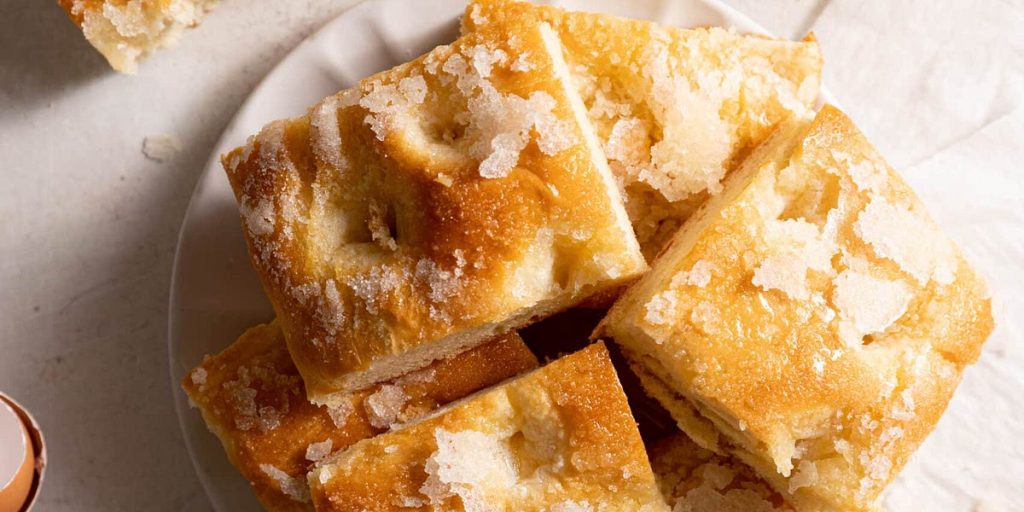
German Butterkuchen Coffee Cake is one of those bakes that feels like home the moment you taste it. Simple in appearance yet rich in flavor, it’s a cake that thrives on balance, soft yeasted dough as the base, a generous amount of butter that seeps into every bite, and a crunchy topping of sugar and almonds that provides just the right contrast. It’s often referred to as “butter cake,” and in Germany, it’s a classic served with coffee in the afternoon, making it a staple for gemütlichkeit, that sense of comfort and togetherness that Germans treasure.
When I first made Butterkuchen in my kitchen, what struck me most was its humility. Unlike layered tortes or intricately decorated cakes, this one doesn’t rely on elaborate frosting or dramatic presentation. Instead, it celebrates the basics: flour, butter, sugar, yeast, and nuts. Yet, once it comes out of the oven and you cut into it, the aroma and taste remind you that sometimes the simplest things are the most satisfying.
The History Behind Butterkuchen
Butterkuchen has been part of German baking tradition for centuries. Its exact origin isn’t pinned down to a specific region because it’s enjoyed throughout the country. Every town has its variation, and it’s often baked for family gatherings, church events, and special celebrations. Some versions use slivered almonds, others add a dusting of cinnamon, and some replace part of the sugar topping with streusel.
In northern Germany, Butterkuchen is especially beloved, often found in bakeries where it’s sold by the slice. The idea is straightforward: a yeasted dough topped with lots of butter and sugar, which melt together during baking to create a golden, slightly caramelized crust. Almonds or other nuts are scattered on top, giving texture and flavor. It’s considered so quintessentially German that it’s sometimes called a “funeral cake” because it’s traditionally served at gatherings after funerals, offering comfort through its warmth and familiarity.
The Beauty of Yeast in Baking
At the heart of Butterkuchen lies a yeasted dough, and that’s what sets it apart from American-style coffee cakes, which are typically made with baking powder or soda. Yeast brings not just lift but also flavor. It adds a subtle tang and depth that balances the richness of butter and sugar.
Making the dough is almost meditative. Mixing the flour, sugar, milk, butter, and yeast feels like laying the foundation for something truly special. The kneading process gives the dough its elasticity, while the resting period allows it to rise and develop structure. There’s a joy in watching a ball of dough transform into a pillow of softness, ready to cradle the buttery topping.
Butter as the Star Ingredient
If there’s one element that makes Butterkuchen unforgettable, it’s the butter. True to its name, this cake doesn’t hold back. Slices of butter are pressed into the dough before baking, and as the heat rises in the oven, they melt and seep into every crevice. The result is a cake that’s moist, rich, and fragrant with a buttery flavor that feels both indulgent and comforting.
What makes it even more delightful is how the butter interacts with the sugar topping. As the sugar melts, it creates a caramelized layer that contrasts beautifully with the tender crumb beneath. The almonds sprinkled on top toast as the cake bakes, releasing their nutty aroma and adding crunch to every bite.
A Coffee Cake Made for Sharing
One of the reasons I adore baking Butterkuchen is because it’s meant to be shared. In Germany, coffee and cake time, known as “Kaffee und Kuchen”, is a cherished tradition, much like afternoon tea in England. Families and friends gather around the table, pour cups of hot coffee, and enjoy a slice of cake together. Butterkuchen, with its modest shape and generous portions, fits perfectly into this ritual.
Whenever I bake it, I imagine it sitting at the center of a table, with plates being passed around, mugs being filled, and laughter echoing through the room. It’s not a cake that tries to impress with grandeur; it wins hearts with its ability to bring people together.
Baking Butterkuchen in My Kitchen
The process of making Butterkuchen at home feels both traditional and flexible. After preparing the dough and letting it rise, I spread it onto a baking sheet, making sure it’s even but not too thin. Then comes my favorite part, pressing cubes of butter into the dough. It feels almost playful, like dotting little treasures that will melt and transform during baking.
Once the butter is in place, I sprinkle a generous layer of sugar over the top, followed by sliced almonds. Sometimes, I like to add a touch of cinnamon or cardamom for warmth, but even without spices, the cake is deeply flavorful. As it bakes, the kitchen fills with the aroma of butter and caramelized sugar, and the anticipation grows with every passing minute.
When it’s finally out of the oven, the golden crust glistens, and the almonds are toasted to perfection. Cutting into it is immensely satisfying, the knife glides through the crusty top into the soft, buttery interior. The first bite always confirms that the effort was worthwhile.
The Texture That Makes It Unique
Butterkuchen has a texture that sets it apart from other cakes. The yeasted base gives it a slight chewiness, while still being tender and light. The butter keeps it moist, so it doesn’t feel dry or heavy, even after a couple of days. The topping adds crunch and sweetness, creating a balance that keeps you reaching for another slice.
What I love most is how it’s not overwhelmingly sweet. Unlike frosted cakes, where sugar often dominates, Butterkuchen allows the natural flavors of butter and yeast to shine. It’s a cake that pairs beautifully with coffee or tea without feeling cloying.
Variations Worth Exploring
While the classic Butterkuchen is perfect on its own, I’ve experimented with a few variations over time. Sometimes, I replace the almonds with hazelnuts or walnuts for a different flavor. Other times, I add a drizzle of honey along with the sugar to enhance the caramelization. On festive occasions, I’ve even incorporated dried fruits like raisins or apricots into the dough for extra sweetness.
Another fun twist is serving it warm with a dollop of whipped cream or a scoop of vanilla ice cream. The contrast of hot and cold makes it feel like an entirely new dessert, even though it’s the same humble cake.
A Cake That Feels Like Comfort
Whenever I bake German Butterkuchen Coffee Cake, I’m reminded of how comforting simple food can be. It doesn’t need layers of frosting or elaborate decoration to impress. Instead, it relies on the fundamentals of baking, yeast, butter, sugar, and flour, combined in a way that feels timeless.
The act of baking it is as comforting as eating it. From mixing the dough to pressing in the butter, from sprinkling sugar to cutting the first slice, each step carries a sense of satisfaction. It’s the kind of cake that turns an ordinary afternoon into something special, simply because it invites you to pause, sip coffee, and enjoy the moment.
Why This Cake Will Always Have a Place in My Kitchen
There are many cakes I’ve baked and enjoyed, but few have the staying power of Butterkuchen. It’s one I return to again and again, not just because it tastes good but because it connects me to a tradition of hospitality and sharing. It feels rooted in history, yet it’s adaptable enough to make my own.
Whenever friends come over, I know I can put this on the table and it will be met with enthusiasm. Whenever I want to treat myself without fussing over elaborate recipes, I know Butterkuchen will deliver. And whenever I need a reminder of the beauty of simple ingredients, this cake is my answer.
Conclusion
German Butterkuchen Coffee Cake is more than a dessert. It’s a piece of cultural heritage, a testament to the power of simple ingredients, and a symbol of comfort and connection. With its yeasted base, buttery richness, and crunchy sugar-almond topping, it offers a perfect balance of flavors and textures.
Baking it at home doesn’t just fill the house with an irresistible aroma; it also creates an opportunity to slow down, share with loved ones, and embrace the joy of everyday rituals. It may not have the grandeur of layered tortes or the decadence of cream-filled pastries, but it has something far more valuable: the ability to make any moment feel warm, welcoming, and complete.
For me, that’s the true magic of Butterkuchen. It’s a cake I will continue to bake, savor, and share for years to come.